

How To Clean Up System Files On Windows 7
Windows contains plenty of files and folders that you don't really need. Betwixt hidden caches, old junk that wastes infinite, and files you can delete to really solve problems, knowing what'due south safe to remove from Windows tin be challenging.
Let's stride through some Windows files and folders that are totally safe to remove, forth with why yous might want to erase them. This will aid you gratis up disk space and larn more nearly your PC. Annotation that some of these folders are in protected locations, so take intendance when deleting them.
The Best Way to Clean Windows Folders: Disk Cleanup
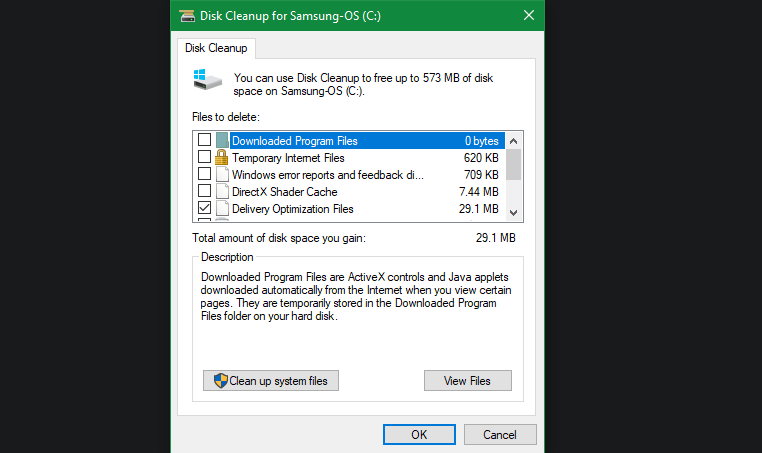
Earlier we look at Windows files and folders you can safely remove, you should know that manually deleting them isn't usually the best mode to go about it.
Aside from wasting time doing this yourself when you could automate the procedure, it's safer to let the Disk Cleanup tool do these cleanings for you. This avoids accidentally deleting files that you need, or messing with the wrong folders.
The Windows Disk Cleanup tool helps y'all reclaim deejay space on your computer and is unproblematic to use. You tin can open up it past searching for Disk Cleanup in the Start carte du jour and selecting a drive. Let it scan, and you lot'll meet several categories of files you lot can erase. For more than options, choose Clean upwards organization files with ambassador permissions.
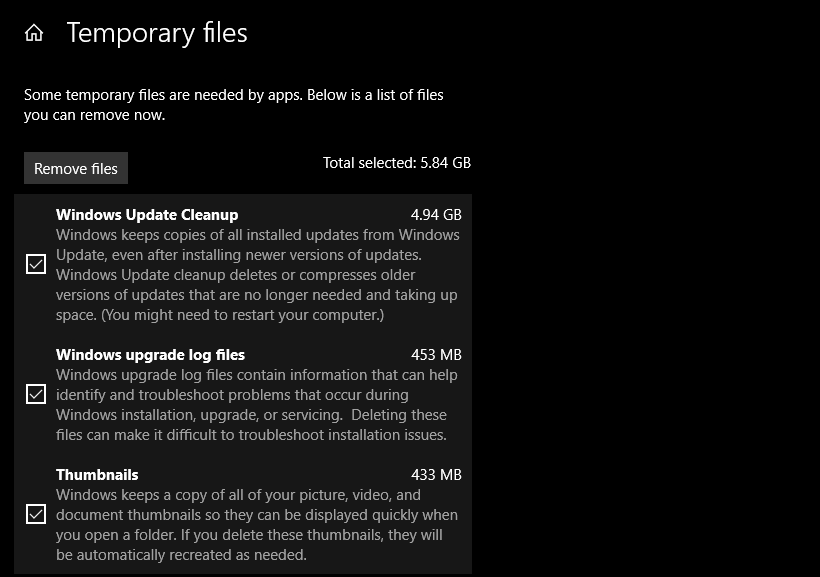
If y'all find this interface too clunky, yous can browse to Settings > System > Storage to try Windows x's newer storage cleanup tool. Click Temporary files in the list of options, then y'all'll see a list populate that'southward similar to what Deejay Cleanup has.
What to Delete From Deejay Cleanup
This isn't a full guide to the Deejay Cleanup tool, and so we're non going to look at every option information technology offers. Notwithstanding, the following several options are low-hanging fruit (brand sure to select Clean up organization files commencement to encounter them all):
- Windows Update Cleanup: This erases former copies of Windows Update files. These are condom to delete in virtually cases, but you should keep them for troubleshooting if you run across update-related problems.
- Windows upgrade log files: Similarly, these are data files that Windows Update keeps to help you dig into problems around upgrades or installations. You tin erase these if y'all oasis't had errors related to upgrading Windows to a new version.
- Language resource files: If you've previously downloaded some other language or keyboard layout that you don't use, this will allow you easily erase it.
- Recycle Bin: While y'all tin empty the Recycle Bin through its own window, you can also do it easily here. Only brand sure there's nothing inside it that you demand.
- Temporary files: As their name suggests, temporary files aren't used for anything in the long-term, so you lot tin erase them without worry.
At present, allow's look at what you tin can delete from Windows x safely.
i. The Hibernation File
Location: C:\hiberfil.sys
Hibernation mode on your PC is like to sleep mode, except the organization saves all your open work to the storage bulldoze and then shuts down. You lot can remove the battery from your laptop and stay in hibernation for a week, then commencement dorsum up and pick up right where you left off.
Of class, this takes up space, which is what the hibernation file is for. Depending on your hard drive size, the hibernation file is likely several gigabytes or more than.
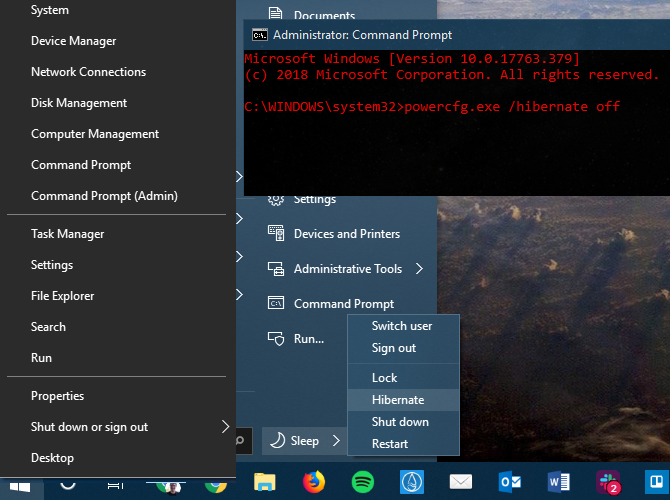
If y'all don't use hibernation and want to disable it, you tin easily do then via the Command Prompt. Note that you shouldn't just delete hiberfil.sys, as Windows will recreate it again.
Right-click on the Start button or press Win + Ten, then open up a Command Prompt (Admin) or Windows PowerShell (Admin) window from the resulting menu. Type the following command to disable hibernation:
powercfg.exe /hibernate off That'due south all it takes to disable hibernation. Windows should delete hiberfil.sys on its own when you do this; feel gratuitous to delete it after if not. Annotation that disabling hide mode volition too forbid your calculator from using fast startup in Windows x. However, this isn't much of a loss, as this characteristic is known to cause slow kick times and other problems.
2. Windows Temp Folder
Location: C:\Windows\Temp
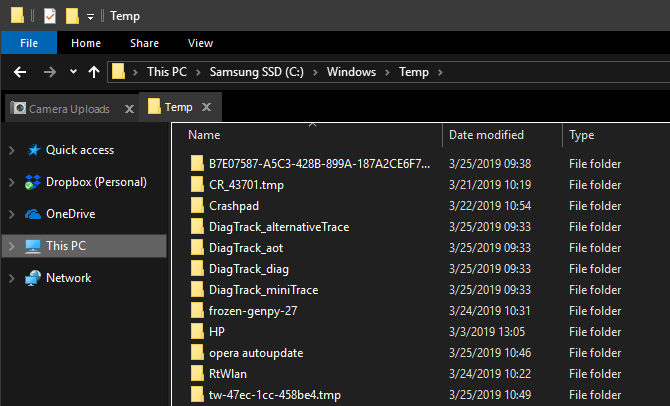
As you'd guess from the name, Windows temporary files aren't of import beyond their initial use. The files and folders inside comprise info that Windows used at one time, only doesn't need anymore.
Instead of cleaning via Disk Cleanup. you can visit this folder and delete its contents manually, if you want. Simply press Ctrl + A to select everything inside, then hit Delete. Windows might give you an fault about a couple of items when y'all do this—only ignore those and articulate everything else.
three. The Recycle Bin
Location: shell:RecycleBinFolder
The Recycle Bin is a special folder—while it appears under your C:\ drive, this is protected by Windows and you don't need to admission information technology that way. Whenever you delete a file on your system, Windows sends it to the Recycle Bin. This is a special identify where deleted files are kept until you permanently delete or restore them.
While this might be obvious to you lot, we're including it in example some aren't aware. It's easy to forget that gigabytes of old data can sit in your Recycle Bin.
You can admission the Recycle Bin through the shortcut on your desktop. If you don't see that, blazon shell:RecycleBinFolder into File Explorer's navigation bar. Once here, you lot'll encounter everything you've deleted recently.
Right-click on individual items and choose Delete to permanently erase them, or choose Restore to send the file dorsum to its original location. On the top Ribbon's Recycle Bin Tools tab, y'all'll run across buttons to Empty Recycle Bin and Restore all items at once.
To tweak the way the Recycle Bin works, click Recycle Bin properties here. On this menu, you lot can change the maximum size of the bin, or even chooseDon't move files to the Recycle Bin.
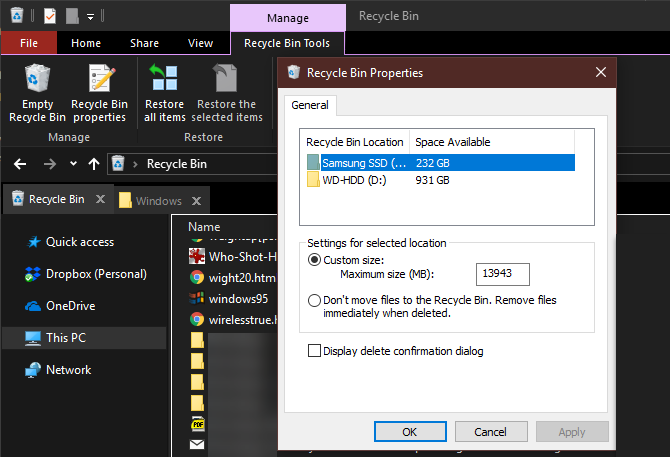
With this option, Windows skips the bin and permanently removes items when you lot delete them. We don't recommend this, because the Recycle Bin gives you a 2d chance in case of an adventitious deletion. Similarly, Display delete confirmation dialog will crave an extra pace whenever y'all erase a file.
4. Windows.erstwhile Folder
Location: C:\Windows.old
Whenever you lot upgrade your version of Windows, the system keeps a re-create of your prior files called Windows.old. This folder essentially holds everything that fabricated upwards your old installation, in case something didn't transfer correctly.
If necessary, you can use this folder to roll back to a previous version of Windows. Information technology's also possible to open the folder and take hold of a few stray files if you lot need.
Windows automatically removes this folder a short time afterwards upgrading, but y'all can remove it yourself if you lot're crunched for space. Information technology won't delete if yous endeavor to go through the File Explorer, and then type Disk Cleanup into the Starting time Menu and launch the tool as described earlier.
Click Clean up system files at the bottom of the window and allow the utility do another scan. Once that's done, look for the Previous Windows installation(s) and delete it using this tool.
Obviously, removing these files makes it harder to recover data in instance of an upshot. After performing a Windows upgrade (even merely to the latest version of Windows 10) nosotros advise y'all to hold onto this folder until you're sure everything is working properly.
5. Downloaded Program Files
Location: C:\Windows\Downloaded Plan Files
This folder's name is a fleck disruptive. Information technology actually holds files used by Net Explorer's ActiveX controls and Java applets, so if you lot utilize the same feature on a website, y'all don't have to download information technology twice.
In issue, this folder is useless today. ActiveX is an extremely outdated technology that'south total of security holes, and Java is about-extinct on today's web. Cyberspace Explorer is the simply browser that supports ActiveX, and you'll probably only run across it on ancient corporate websites (if e'er) at present.
Well-nigh domicile users don't employ IE anymore, let alone ActiveX. Your Downloaded Program Files folder might already be empty, but feel free to clean out its contents if it's not.
vi. LiveKernelReports
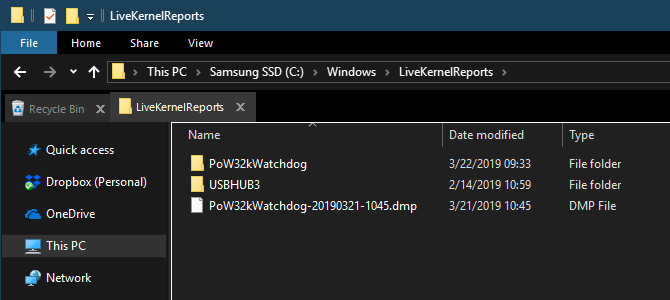
Location: C:\Windows\LiveKernelReports
The LiveKernelReports folder is some other directory which likely comes up when you're scanning for large files on your calculator. This folder is home to dump files, which are ongoing information logs that Windows keeps. If your computer runs into an issue, you tin can clarify the contents of these files to commencement troubleshooting your problem.
Whatsoever huge files ending with the DMP file extension in this folder are safe to delete. Similar the higher up locations, though, we recommend using Disk Cleanup instead of deleting the file yourself.
When Windows crashes or yous have other major reckoner issues, don't delete these dump files correct abroad. You tin use a plan like WhoCrashed to get more info from them.
7. Rempl Binder
Location: C:\Programme Files\rempl
While the Rempl folder isn't large, you lot might exist surprised when you meet it appear on your system. It contains several modest files, and you might even notice a few Job Manager processes connected to information technology.
This folder is continued to Windows 10 update delivery. It includes "reliability improvements" to help make Windows ten updates become smoothly and iron out compatibility issues.
Then can y'all delete the Rempl folder? There are seemingly no adverse effects from doing so. Yet, since information technology only takes upwards a few megabytes and tin make Windows upgrades less frustrating, it'south all-time to keep it effectually.
These Windows Folders Tin Be Deleted
It takes a bit of looking effectually, but Windows holds plenty of files and folders that aren't necessary. Remember that your computer does a pretty good chore of keeping itself clean, so you don't have to obsessively remove the contents of these folders unless you're really depression on disk infinite.
Running the Deejay Cleanup tool one time or twice a calendar month should do enough to proceed the cruft away. If yous yet demand to free up a lot of infinite, try uninstalling some unnecessary Windows software.
Nearly The Author 

Source: https://www.makeuseof.com/tag/delete-windows-files-folders/
Posted by: laniermashe1935.blogspot.com
0 Response to "How To Clean Up System Files On Windows 7"
Post a Comment